



Global Launch of Earth Rover Program Unveils “Soilsmology” on World Soil Day
Earth Rover’s new “Soilsmology” tech uses seismic waves and ultra‑low‑cost sensors to map soil health in real time, aiming to power food security, climate resilience, and a global open soil data network.

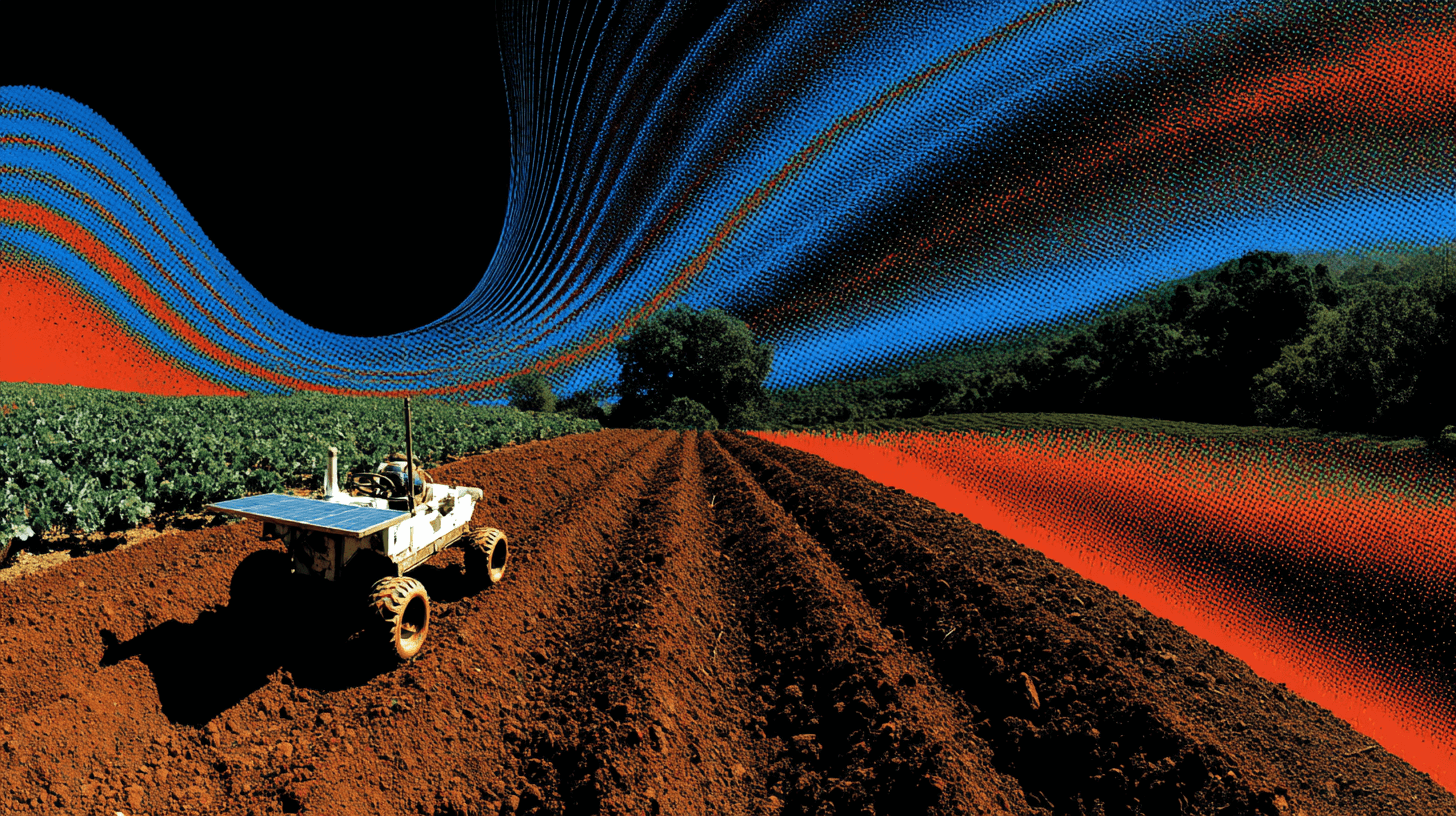
A new global initiative, the Earth Rover Program, was launched on World Soil Day (December 5, 2025), introducing Soilsmology — a novel, non-invasive seismic-based method for assessing soil health at scale. The goal: to make the invisible world beneath our feet visible, measurable, and actionable for food security, climate resilience, and sustainable land management.
Soils underpin nearly all human food production and hold more carbon than the atmosphere and vegetation combined — yet about 75% of the world’s soils are now degraded, threatening biodiversity, crop yields, and ecosystem stability. Traditional soil testing methods, often invasive and costly, have limited our ability to monitor soil health broadly and frequently.
Soilsmology seeks to change that by using seismic techniques: ultrahigh-frequency waves travel through the ground, revealing underground properties such as moisture content, bulk density, internal structure, and soil volume — all crucial indicators of soil integrity. Early trials across Europe, Africa, and South America have demonstrated promising results, delivering fine-scale (around 10 cm) resolution and showing consistent data across different ecosystems and farming systems.
A major breakthrough lies in accessibility: thanks to a new MEMS accelerometer design, the cost per sensor has dropped drastically — from roughly US $1,000 in 2023 to about $10 today, with a long-term aim of lowering that toward $1. By bringing costs down, Earth Rover hopes the technology becomes usable not just by well-funded labs, but by farmers everywhere — including in low-income regions.
Through open-source, encrypted data-sharing platforms, the Program envisions building a global, citizen-science soil network — akin to a “Human Genome Project for soil.” Users worldwide will contribute data, gradually creating a comprehensive, high-resolution global soil map that can inform sustainable farming, carbon-storage estimates, and climate-resilient land-use planning.
Experts say Soilsmology could reshape soil science and agricultural practice. Soil-structure mapping without digging reduces environmental disruption, and real-time soil-health diagnostics could help farmers optimize water use, reduce fertilizer dependence, improve yields, and restore degraded lands.
As the Earth Rover Program prepares to publish its inaugural report, Soilsmology: Transforming our Understanding of Soil, global attention is turning toward whether this seismic-based soil mapping can deliver on its promise — and help safeguard the planet’s fundamental resource.
Sources: Earth Rover Program Launches Globally on World Soil Day, Unveils Scientific Concept of “Soilsmology” — GlobeNewswire, Dec 05, 2025.
Earth Rover Program — organisational website & mission statement. https://www.earthroverprogram.org/ and https://www.earthroverprogram.org/the-program
Background on importance of soil health and World Soil Day context — UN.
United Nations. https://www.un.org/en/observances/world-soil-day
The Guardian. https://www.theguardian.com/environment/2025/dec/05/soilsmology-seismic-waves-soil-health-boost-yields