


In the world of Nostr, the open protocol powering a new generation of social media, the relay is everything. But unlike the massive, centralized servers of the old web, a relay is simple, independent, and nearly impossible to kill.
What is a Relay?
A relay is a server that does exactly three things: it receives your posts, it stores them, and it sends them to anyone who asks. It doesn’t decide what you can say. It doesn’t have a CEO or a profit motive. It is just a pipe for information.
The Power of Independence
The most important thing to understand about Nostr is that relays do not talk to each other.
On a traditional social network, one central server holds everything. If you post something, it goes to one place. If that server is taken down or decides to ban you, your content vanishes.
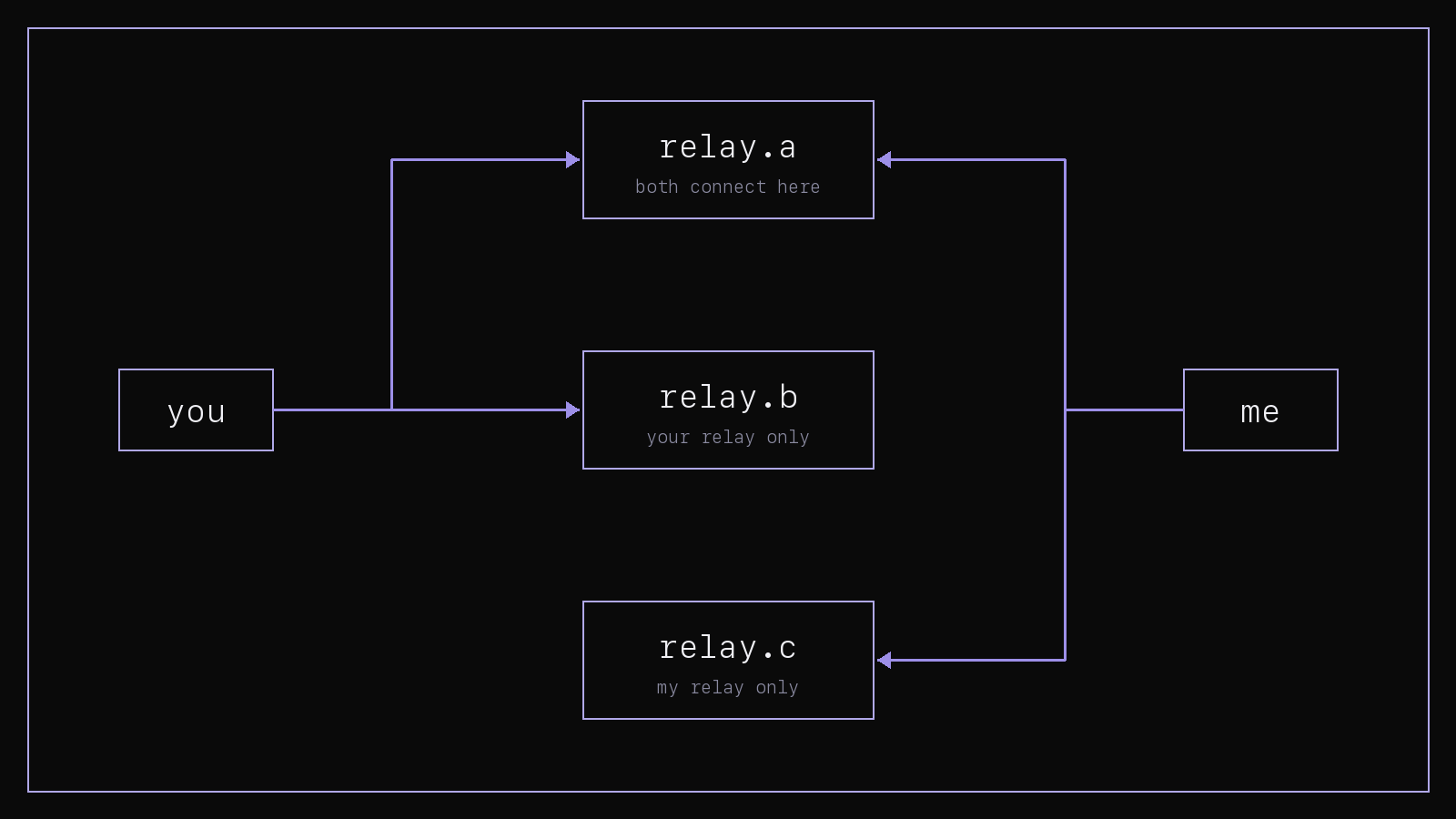
On Nostr, you choose which relays you connect to. If you and I are on different relays, we won’t see each other’s posts until we find a relay we both share. This might sound like a hassle, but it is a powerful feature. It means you can have a private relay for your own personal backups, or a relay dedicated entirely to a specific topic like football or local news.
The Outbox Model
To make sure people can find your content across the network, Nostr uses a simple system called the outbox model. You can publish a small event that tells the world “these are the relays I write to, and these are the ones I read from.” Modern Nostr apps like Damus, Amethyst, and Primal use this list to find your content automatically. If someone can’t see your posts, it is almost always because you don’t share a relay. Adding a popular one to your list solves it instantly.
Fighting Censorship
Because relays are so simple, they are incredibly resilient. Anyone can run one on a tiny VPS or even a low-end phone. Since they don’t talk to each other, shutting down one relay doesn’t affect the others. If a relay is taken offline, a new one can pop up somewhere else in minutes. With hundreds of relays spread across the globe, the network only grows stronger as it becomes more distributed.
How to Get Started
The best way to understand relays is to use them. Download a Nostr client, connect to a few different relays, and start exploring. You are in control of where your data lives, and that is the whole point.
A few clients to start with: Damus for iOS and macOS, Amethyst for Android, and Primal which works on web, iOS, and Android. All three let you pick your relays and manage them directly.
For relays, you can connect to any of these to get going: nos.lol, relay.damus.io, relay.primal.net, or nostr.wine. Connect to two or three of them in your client, publish something, and watch it show up across the network.