


The Fuel Few Talk About
America is building the next generation of nuclear reactors. The race to fuel them has just begun.

An interview with Christo Liebenberg, Co-Founder, President & Chief Technical Advisor, LIS Technologies
BY THE NUMBERS
• The US currently imports 95-98% of its nuclear fuel
• Russia and China together control over 50% of global uranium enrichment capacity
• A ban on Russian enriched uranium imports went into effect in August 2024
• The DOE has committed $2.7 billion to restore American enrichment capacity
• Global uranium demand is projected to surge 28% by 2030 and more than double by 2040
About Christo Liebenberg
With an MS in physics, Christo Liebenberg began his career at the Atomic Energy Corporation of South Africa in 1985, working on CO2 laser MOPA systems for uranium enrichment. From there he held senior roles at Silex Systems, Global Laser Enrichment, and ASML, all centered on the same core technology. In 2020 he co-founded CRISLA, Inc. with Dr. Jeff Eerkens to revive the CRISLA laser enrichment process, which had been demonstrated in the 1980s and early 90s before being abandoned when Russia flooded global markets with cheap enriched uranium after the Cold War. In 2023, LIS Technologies acquired CRISLA, Inc. and Christo became CEO to lead its commercialization. He watched the field get shelved, kept building his expertise anyway, and finds himself at the center of it all at the exact moment the US is scrambling to rebuild what it abandoned decades ago.
Most people have never had to think about where nuclear fuel comes from. You plug something in, the lights turn on, and whatever happens between the uranium mine and the power socket remains comfortably invisible. That invisibility, it turns out, is a problem.
The United States currently imports 95-98% of its nuclear fuel. Russia and China together control more than half of the world's uranium enrichment capacity, the critical industrial process that converts raw uranium into reactor-grade fuel. In May 2024, the US signed the Prohibiting Russian Uranium Imports Act into law, making a ban on Russian enriched uranium effective August 11, 2024, with a hard cutoff on all remaining waivers by 2028. Around the same time, the Department of Energy launched a program committing roughly $2.7 billion to rebuild domestic enrichment capacity, infrastructure the US largely walked away from in the 1990s when cheap Russian fuel made it economically pointless to compete.
Meanwhile, China is building 150 new nuclear reactors by 2035. Microsoft, Google, and Amazon are signing nuclear power agreements to feed their AI data centers. And global uranium demand is projected to surge 28% by 2030, more than doubling by 2040, driven by a combination of decarbonization goals, next-generation reactor deployments, and the insatiable electricity appetite of artificial intelligence.
At the center of the effort to close this gap is LIS Technologies, a US company developing a laser-based approach to uranium enrichment that its founders believe could be both cheaper and more efficient than the centrifuge technology that has dominated the industry for decades. I spoke with co-founder and President Christo Liebenberg, a physicist who has spent his entire career working on this specific technology, about how the US got here, what it would take to recover, and why the fuel few talk about may be the most important bottleneck in the energy transition.
"You should not only not shut down the nuclear power plants, but you should also reopen the ones that have already shut down... This is total madness to shut them down."
— Elon Musk
The Interview
Q: I've read that the US basically let its enrichment capability collapse after the Soviet Union flooded the market with cheap fuel in the 1990s. Is that a fair summary and how dependent did the US become on foreign suppliers as a result?
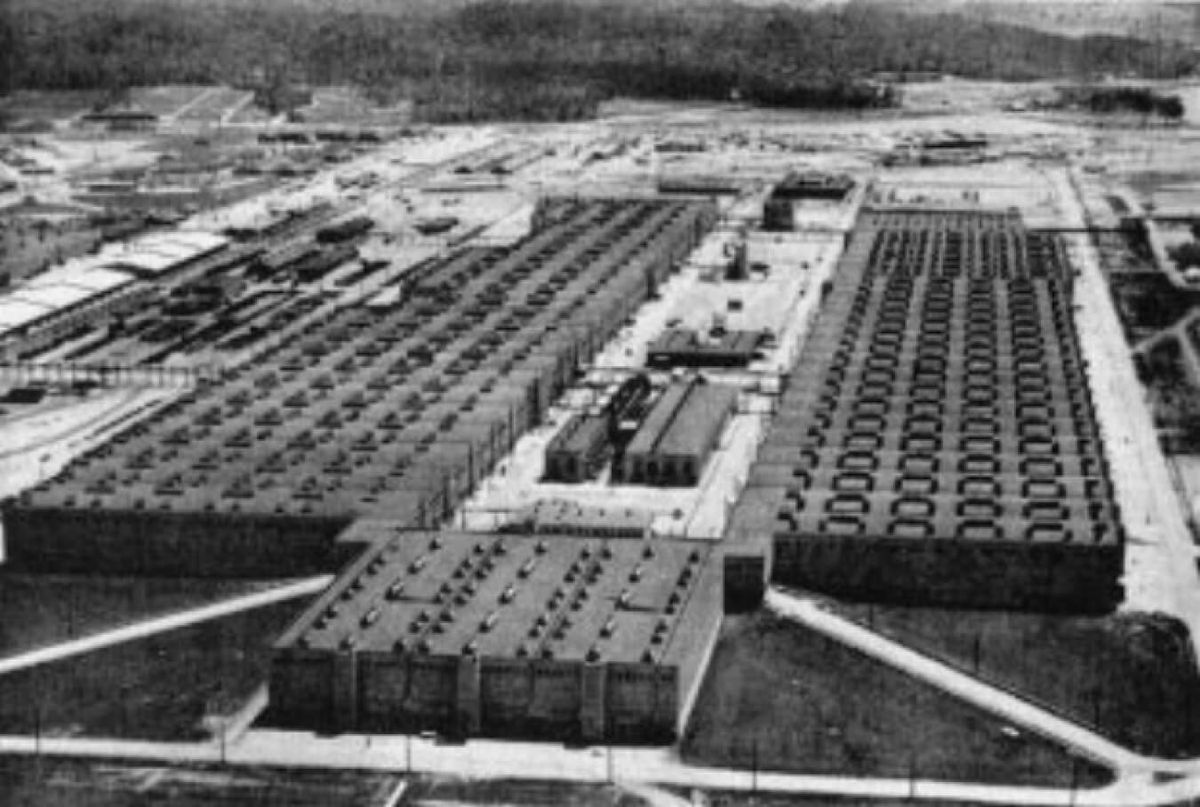
Christo Liebenberg: Yes, that’s essentially what happened. The U.S. used to be the world’s biggest producer and exporter of enriched uranium, and a lot of that capability was built out during the Manhattan Project era, especially in places like Oak Ridge.
When the Soviet Union collapsed, Russia started selling enriched uranium into the global market at very low prices, in some cases less than half of what it had been. That made it very difficult for U.S. technologies to compete, and many programs were simply stopped. Over time, the U.S. became increasingly reliant on external sources, not just for uranium, but for the enrichment services themselves, which is really the more difficult part to replace.
Q: China is planning to build 150 new nuclear reactors by 2035. The US has zero currently under construction. How does that gap translate into something concrete, what does the US actually risk losing if enrichment capacity doesn't keep up?
CL: When you build that many reactors, you are not just building power plants, you are building long-term demand for fuel and the entire infrastructure around it. That includes enrichment, fuel fabrication, and the supporting supply chains.
If the U.S. does not build out enrichment capacity alongside reactor development, then it risks not being able to supply its own fleet. You can have the reactors, but if you don’t have the fuel, you don’t have a complete system. That has very real implications for cost, for timelines, and for who ultimately controls access to that fuel. For the US to become self-sufficient, and for our energy security and our national security, we have to rebuild the entire nuclear fuel supply chain.
Q: Microsoft, Google, Amazon, they're all signing nuclear power deals now. What's the connection between AI data centers and enriched uranium? It feels like an unlikely pairing to most people.
CL: It may seem like an unusual connection, but it really comes down to power demand. These data centers require very large amounts of reliable, continuous electricity, and nuclear is one of the few sources that can provide that consistently.
Once you start adding that kind of demand, the question becomes where the fuel comes from. Many of the advanced reactors being considered for these applications require HALEU, which is already in short supply. So there is a very direct link between the growth in AI infrastructure and the need for more enrichment capacity. Big tech companies are signing PPA’s (Power Purchase Agreements) with SMR companies, but there is a need for them to also invest in the nuclear fuel supply chain in the form of FPA’s (Fuel Purchase Agreements).
Q: You're using lasers to enrich uranium rather than the centrifuge approach most people associate with the process. Can you explain that in terms a non-physicist can follow and why does the method matter for what you're trying to build?
CL: Most conventional methods, like centrifuges, rely on spinning uranium gas at very high speeds and repeating that process over many stages to gradually increase the concentration of U-235. It is a mechanical process, and it requires a large number of cascades to get to the desired level.
With laser enrichment, we take a different approach. We use lasers that are tuned to selectively excite only the U-235 isotope. Single-stage means you irradiate the uranium once, and it’s enriched from natural levels up to LEU. If you irradiate it a second time, you can go all the way to HALEU, up to about 20%. That reduction in steps is important, because it simplifies the system and makes it more efficient and easier to scale.
Q: If everything goes right for LIS Technologies — the technology scales, the funding keeps coming, the DOE partnership delivers — what does that actually change? What's the version of this story where the US wins?
CL: If everything goes according to plan, the main outcome is that the U.S. regains a domestic enrichment capability that can operate at scale. That means being able to produce both LEU for existing reactors and HALEU for the next generation of systems.
It also changes how quickly and efficiently that capacity can be deployed. If you can move from natural uranium to LEU in a single stage, and then to HALEU in a second stage, that has a significant impact on cost and throughput. In that scenario, the U.S. is no longer dependent on external suppliers for a critical part of its energy system, and it is in a position to support its own nuclear expansion going forward.
A Note on Risk
Laser enrichment is not a new idea. The concept has been pursued by researchers across more than 26 countries for over 50 years, which makes what LIS Technologies is attempting both ambitious and, for the first time, genuinely plausible. The CRISLA process was not abandoned because it failed in the lab. It was stopped in the early 1990s because cheap Russian uranium made it economically pointless to continue. The science worked. The market didn't need it yet.
That calculation has now reversed entirely. The DOE's selection of LIS Technologies as one of six contract awardees under its $3.4 billion Low-Enriched Uranium Acquisition Program reflects the kind of institutional confidence that didn't exist a decade ago. The funding, the geopolitical urgency, and the commercial demand are all now aligned in a way they never were before. The road from demonstration facility to commercial scale is still long but for the first time in thirty years, America has every reason to get there.
Context & Further Reading
Uranium price data sourced from market trading records.
Current spot price: $85.15/lb (April 2026).
Uranium demand projections: World Nuclear Association Nuclear Fuel Report
US uranium security analysis: "Fueling the Future: Recommendations for Strengthening US Uranium Security" — Baskaran & Schwartz, CSIS, February 2025
CRISLA technology background: "The CRISLA Advantage: Why LIS Technologies' Laser Enrichment Process Could Change the Face of Nuclear Fuel" — Chris Gallagher, 2024
China nuclear expansion: "How Innovative Is China in Nuclear Power?" — ITIF, 2024
LIS Technologies DOE contract: LIS Technologies & NANO Nuclear Energy DOE LEU Acquisition Program announcement